
Conversational design
Blip + iFood
Overview
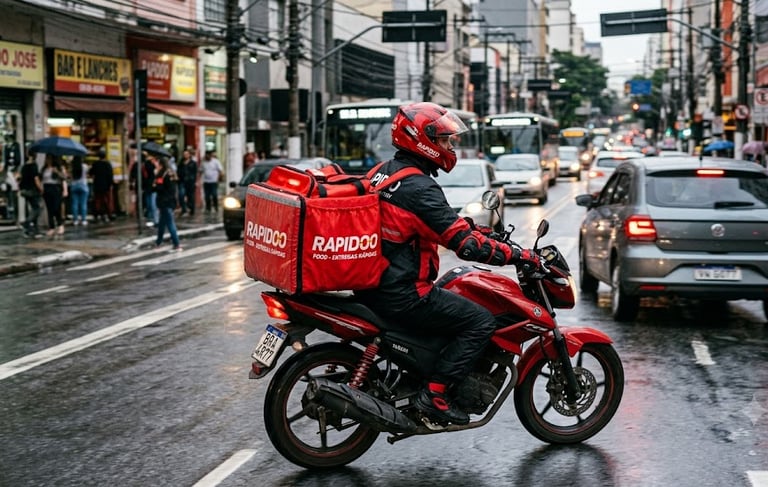
The iFood Drivers conversational ecosystem had the double challenge of onboarding (registering) new delivery drivers and offering real-time support to the active base.
When taking on the product in my squad, I adopted a continuous improvement and Lean UX approach over the existing legacy system. The objective was to map waste in the current flow, identify usability bottlenecks and increase user satisfaction rates.
The diagnosis
Through a phase of document research and navigation data analysis, three major opportunities for impact were immediately identified:
Outdated FAQ:
Low resolution rate in support.
Inconsistency in communication:
Different tones of voice generating cognitive friction.
Lack of autonomy:
A channel focused on acquisition, leaving the existing customer base neglected.
Standardization, Tone of Voice, and Scalable Writing
To address fragmented communication, I led the creation of a UX writing guide specialized for conversational interfaces. The process involved auditing existing flows, immersing myself in the iFood brand book, and analyzing logs of actual conversations.

Content Curation and Intelligent Information Architecture
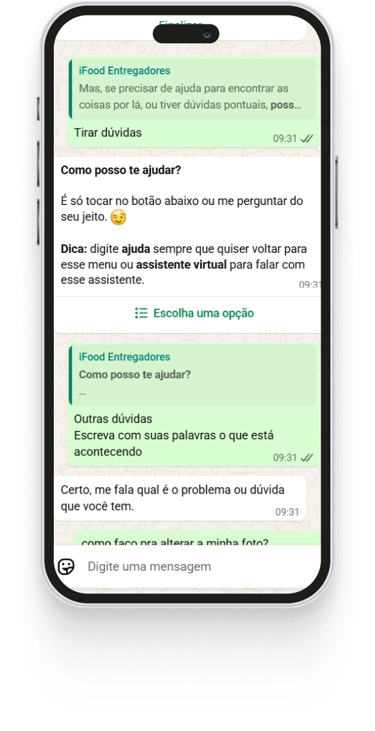
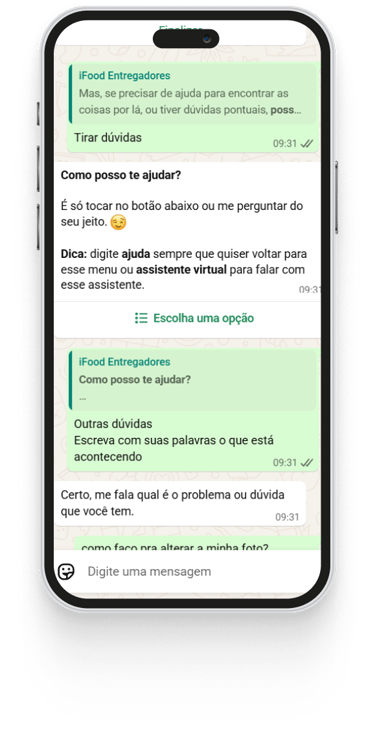
Analysis of the support module revealed that most inquiries concerned basic access to the application, but resolution rates were low because the knowledge base (FAQ) was outdated.
Impact and Lessons Learned
Process Efficiency: The use of AI has reduced the time required to create content and documentation on platforms.
Agile Culture: The entire process focused on incremental deliveries using Scrum, working side-by-side with Product Managers and Engineering to ensure clean handoffs in Figma.
Lesson Learned: The true value of AI-driven conversational design lies not just in the technology itself, but in how we use it to simplify the user's daily life and deliver business returns.